v4.0 • Visual Evidence Edition
SNV-601: Metabolic Rescue for IO-Refractory Tumors
A Patented Oral Ketone Platform to Unlock Non-Responders in Checkpoint & Cell Therapies
Senovia Biosciences, Inc.
Scientific Brief | February 2026
3,944
Papers Analyzed (internal corpus analysis)
The Checkpoint Resistance Breakthrough
TC-1 Tumor Model with Primary Anti-PD-1 Resistance
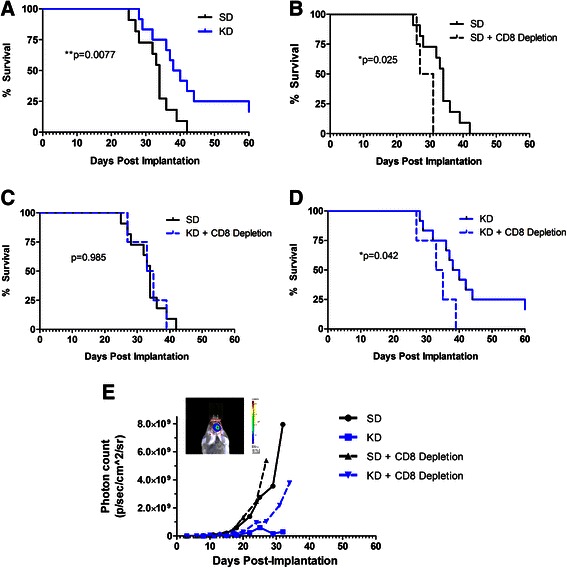
Intermittent 3-hydroxybutyrate + anti-PD-1 produced durable tumor eradication
with rechallenge resistance
Business Development Summary
- What: SNV-601 is an oral ketone prodrug that rescues metabolically exhausted T
cells
- Who: IO non-responders (~12% ORR, Haslam 2019); CAR-T persistence failures
- Why it matters: Strong preclinical signal: primary resistance → >70% eradication in
refractory models
- What's novel: Pharm-grade, titratable exposure + composition patents to 2045 +
partner combo IP opportunity
- Biomarker plan: Serum ketones, myeloid PD-L1, T-cell exhaustion markers, CAR-T
expansion
1. The Problem: Why Current IO Fails
Most cancer patients do not respond to checkpoint inhibitor monotherapy. One estimate across FDA labels
suggests only ~12% respond (Haslam & Prasad 2019, PMID: 31178031). These "cold tumors" with immunosuppressive microenvironments
represent a massive unmet need. IO monotherapy achieves 20-40% response rates in most solid tumors. In PD-1-resistant models, metabolic licensing with 3-hydroxybutyrate achieved >70% tumor eradication (Ferrere et al., JCI Insight 2021, PMID: 33320838). This represents a step-change in IO-refractory disease.
⚠️ The Root Cause: T-cell metabolic exhaustion in the glucose-deprived tumor
microenvironment. The Warburg effect starves infiltrating T cells and CAR-T cells of the bioenergetic
substrate they need for cytotoxic function.
SNV-601 addresses this root cause by providing an alternative fuel source (ketone bodies)
that T cells can utilize even when glucose is unavailable. This metabolic rescue restores T-cell/CAR-T
effector function in the hostile TME.
2. The Breakthrough: Three Paths to Efficacy
The Mechanism Triad
1. Tumor Sensitization
Metabolic stress on cancer cells via Warburg reversal. Ketones shift tumor metabolism, reducing
lactate production and acidosis.
2. Immune Activation
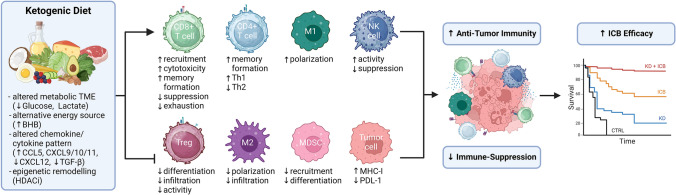
BHB provides ATP when glucose unavailable. CD8+ T cells and CAR-T maintain cytotoxic function;
HDAC inhibition promotes memory formation.
3. TME Modulation
Reverses immunosuppression. NLRP3 inhibition reduces MDSC/TAM recruitment; prevents PD-L1
upregulation on myeloid cells.
2.1 Molecular Target Engagement
β-Hydroxybutyrate (BHB) and acetoacetate engage multiple validated oncology-relevant targets at physiologically
achievable concentrations. SNV-601 achieves therapeutic BHB levels (1.5–3.0 mM) that exceed published thresholds
for all primary targets.
| Target |
Mechanism |
Threshold |
Oncology Relevance |
Reference |
| NLRP3 Inflammasome |
Direct inhibition |
1–10 mM BHB |
Reduces MDSC/TAM recruitment; blocks IL-1β/IL-18 |
Youm 2015 |
| HDAC Class I |
Competitive inhibition |
IC₅₀ 2–5 mM |
Epigenetic reprogramming; T cell memory formation |
Shimazu 2013 |
| GPR109A (HCAR2) |
Agonist signaling |
EC₅₀ 0.8–1.5 mM |
Anti-inflammatory signaling in myeloid cells |
Taggart 2005 |
| Lysine β-Hydroxybutyrylation |
Novel PTM |
1.0–2.0 mM |
Global histone modification; gene expression remodeling |
Xie 2016 |
| T Cell Mitochondrial Fuel |
Alternative ATP source |
>1.0 mM |
Maintains CD8+ function in glucose-depleted TME |
Ferrere 2021 |
3. The Proof: Hero Paper Visual Evidence
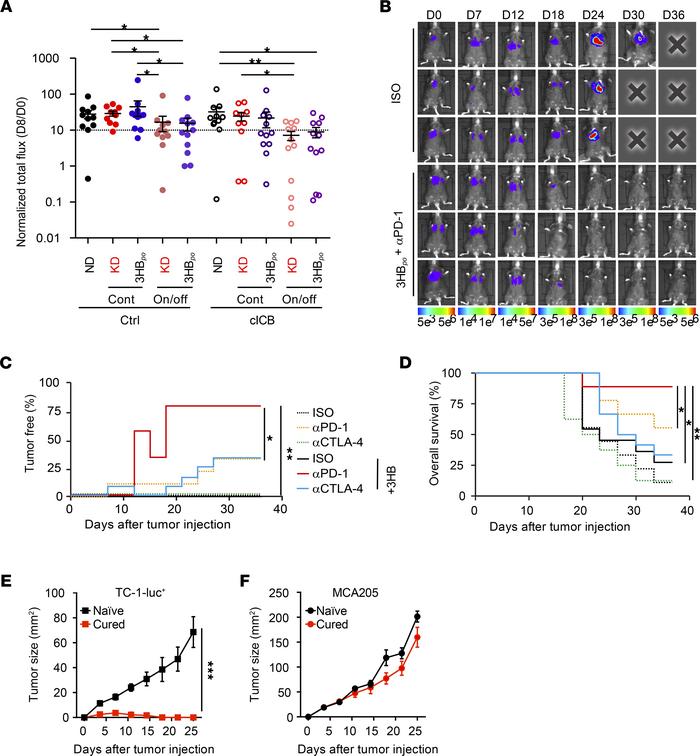
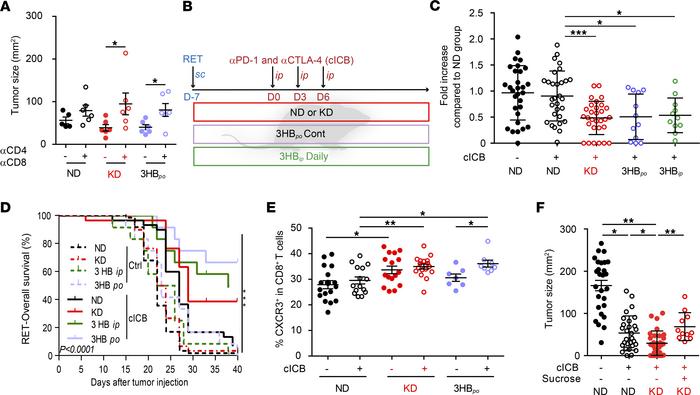
3.1 IO Combination Studies
LANDMARK: The Ferrere Effect — From Resistance to Cure Landmark
Model: TC-1 Lung Cancer (primary resistance to anti-PD-1)
Result: Primary resistance → >70% tumor eradication
with intermittent 3HB + anti-PD-1
Durability: "Cured" mice resisted TC-1 rechallenge—indicating
antigen-specific immune memory
Mechanism: 3HB prevented PD-L1 upregulation on myeloid cells; promoted
CXCR3+ T cell expansion
Ferrere et al. JCI Insight 2021. PMID: 33320838
| Study |
Model |
IO Alone |
+ Ketone |
Key Finding |
| Ferrere 2021 |
TC-1 Lung (refractory) |
Primary resistance |
>70% cured |
Rechallenge resistance; immune memory |
| Murphy 2024
|
Prostate (ICB-resistant) |
0% |
23.1% cured |
Engineered ICB-resistant line |
| Dai 2021 |
CT26 Colon |
5/12 survivors |
8/11 survivors |
AMPK→PD-L1 regulation |
3.2 CAR-T + Ketone Synergy: 6× Complete Response Rate
LANDMARK: CAR-T Enhancement via Oral BHB ASH Plenary 2024
Model: DLBCL (CD19+ xenograft) with suboptimal CART19 dose
Result: Complete response CR 6/7 vs 1/7 with oral BHB
supplementation
Mechanism: BHB carbons preferentially enter TCA cycle; ATAC-seq confirmed
increased chromatin accessibility at FOXO1, TCF7, GZMB
Clinical correlation: Serum BHB at day 7 correlated with CAR-T expansion
(P=0.016) in n=17 LBCL cohort
Implication: Simple oral adjunct could dramatically improve CAR-T
persistence and response rates
Liu et al. Blood/ASH Plenary 2024
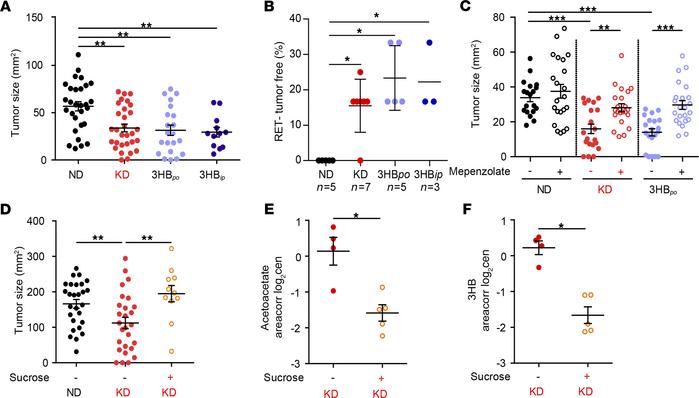
3.3 Complete Remission / Curative Outcomes
3.4 SOC Synergy / Chemosensitization
3.5 Mechanism Visualization: Dual-Action Immunotherapy
4. Total Addressable Market by Tumor Type
Evidence strength and commercial potential vary by indication. Our tiered prioritization reflects both unmet
need and data maturity:
Tier 1 • Lead
Glioblastoma
~$2B US market | No curative options
Phase 1 + MRI (PMID 40595067) | PD-1/CTLA-4 reduction (PMID 27178315)
Tier 1 • Lead
Pancreatic Cancer
~$3B US market | 90% fail SOC
KPC survival improvement (PMID 36382086) | Iowa Phase 1 (PMID 28437190)
Tier 2
NSCLC (IO-Refractory)
~$20B US market | IO resistance large
15 papers in corpus
Tier 2
Melanoma
~$6B US market | IO-resistant rescue
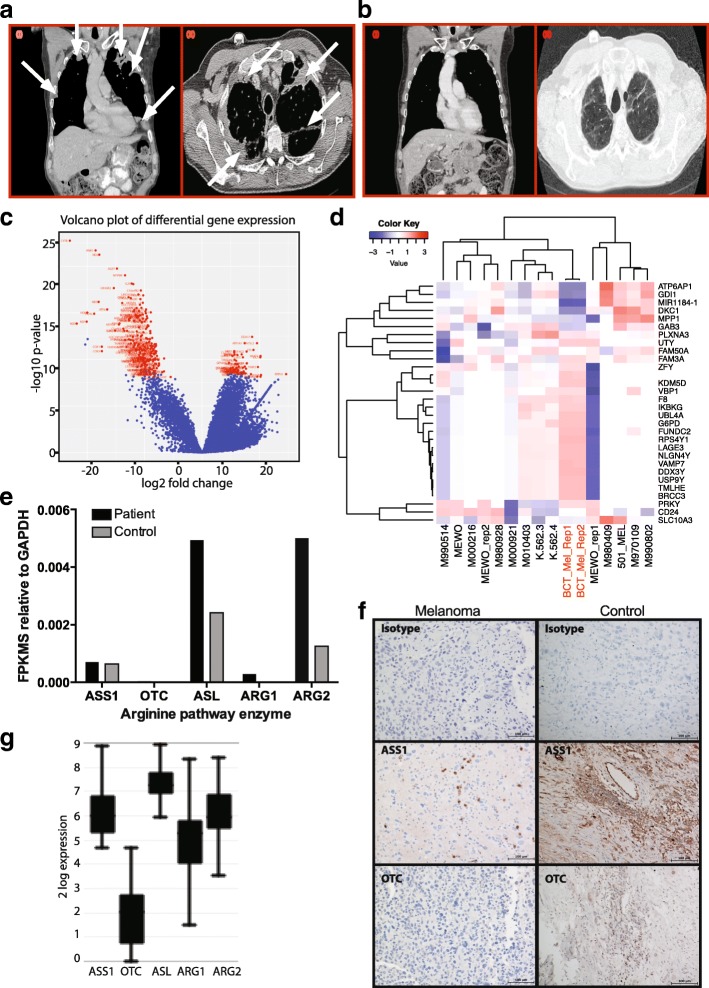
Complete remission imaging (PMID 29776373) | Triple combo (PMID 29423067)
Tier 3
Breast (TNBC)
~$5B US market | Limited IO response
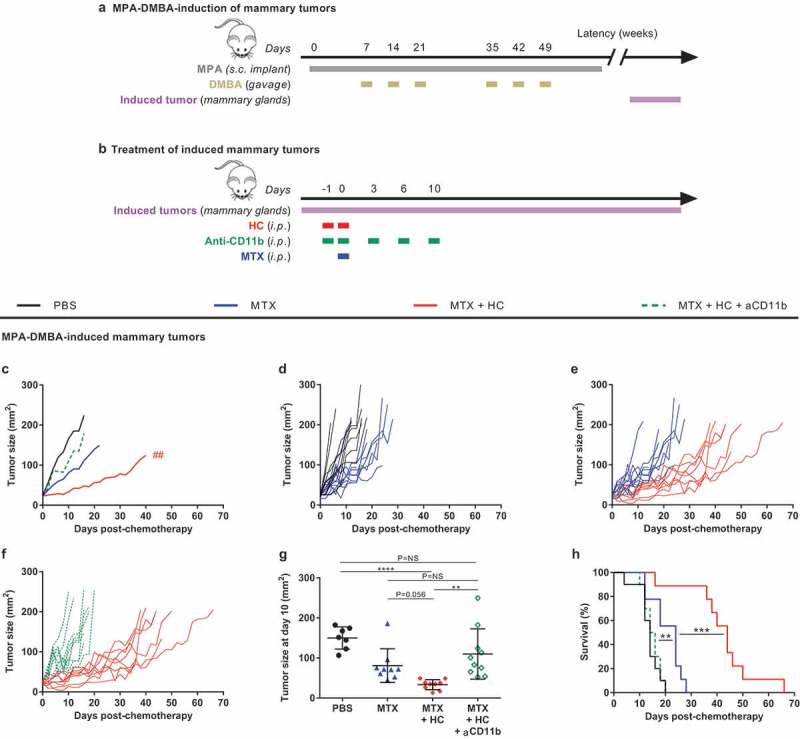
pCR rates (PMID 39694040) | FMD + Carboplatin OS (PMID 37615485)
Tier 3
Colorectal
Combination opportunity
OS Kaplan-Meier (PMID 41375616) | FMD + PD-1 synergy
5. Competitive Positioning: The SNV-601 Moat
| Attribute |
Checkpoint Inhibitors Alone |
CAR-T Alone |
Other Metabolic (DCA, Metformin) |
SNV-601 |
| IO-Refractory Rescue |
❌ No (by definition) |
⚠️ Limited persistence |
⚠️ Weak/indirect data |
✓ >70% eradication |
| T-Cell Fuel Source |
❌ Does not address |
❌ Does not address |
⚠️ Indirect |
✓ Direct ATP provision |
| IP Protection |
Expiring (LOE risk) |
Platform-specific |
❌ Generic |
✓ 2045 (CoM patents) |
| Dose Control |
✓ Precise |
✓ Precise |
✓ Precise |
✓ Titratable exposure |
| Oral / ICU Compatible |
⚠️ IV (most) |
❌ Cell infusion |
✓ Oral |
✓ Oral liquid / NG |
| CAR-T Applications |
N/A |
— |
❌ Not studied |
✓ CR 6/7 vs 1/7 |
Key Differentiators:
- Acetoacetate-specific mechanism: Not just fasting/ketones—AcAc + BHB dual
delivery with 8-14h AcAc half-life
- Pharm-grade control: Precise, reproducible exposure vs diet with 23.5-100%
adherence variability
- Combination IP opportunity: SNV-601 + Partner IO = Joint method-of-use patents
extending franchise to 2045+
6. The Partnership Thesis
🤝 Rescue Your IO-Refractory Patients
- The Problem: ~88% of patients don't respond to checkpoint inhibitors. CAR-T
durability remains a challenge.
- The Solution: SNV-601 metabolically rescues exhausted T cells, converting
non-responders to responders.
- The Synergy: Mechanistically coherent with your IO/CAR-T portfolio—same target
population, complementary mechanism.
- The IP Play: Joint method-of-use patents for SNV-601 + Partner Asset extend
franchise exclusivity to 2045+.
- The Ask: Co-development or option-to-license for Phase 1b combination trial in
IO-refractory solid tumors.
🏢 Ideal Partner Profile
- PD-1/PD-L1/CTLA-4 franchise facing LOE or response rate challenges
- CAR-T portfolio seeking persistence/durability enhancement
- Oncology R&D with interest in metabolic immunology
- Clinical infrastructure in refractory solid tumor or lymphoma settings
7. Development Risks & Mitigations
⚠️ Key Risks & Mitigations
- Tumor ketone utilization heterogeneity: Biomarker-enriched patient selection
(T-cell metabolic profiling)
- Cachexia/weight loss confound (diet studies): SNV-601 drug avoids caloric
restriction
- High-dose sustained exposure TBD: Phase 1 PK-guided dose titration; projected
83-95% daily coverage at BID
- Clinical translation pending: IND-enabling studies planned; Phase 1b initiation within
12 months of partner funding
- Competitive timing: UPenn NCT06610344 (CAR-T + Ketone-IQ) is recruiting—field
validation is imminent
8. Target Engagement Matrix
| Target |
Threshold |
Oncology Role |
SNV-601 |
Citation |
| T-Cell Fuel |
2.0-4.0 mM |
Rescues TILs from metabolic exhaustion |
✓ Engaged |
Ferrere 2021 |
| NLRP3 Inflammasome |
1-10 mM |
Reduces MDSC/TAM immunosuppression |
✓ Engaged |
Youm 2015
|
| HCAR2/GPR109A |
0.8-1.5 mM (EC₅₀) |
Anti-inflammatory signaling |
✓ Engaged |
Taggart 2005 |
| HDAC Class I |
2.0-5.0 mM (IC₅₀) |
T memory formation |
✓ at higher dose |
Shimazu 2013 |
| Lysine Kbhb |
1.0-2.0 mM |
Epigenetic gene regulation |
✓ Engaged |
Xie 2016 |
9. Key References
Landmark IO Combination Studies
- PMID: 33320838
— Ferrere et al. Ketogenic diet and ketone bodies enhance anticancer effects of PD-1 blockade. JCI
Insight 2021. >70% eradication in refractory model; rechallenge resistance.
- Murphy
2024 — KD alters epigenetic landscape to overcome ICB resistance. Cancer
Research. 23.1% cure in engineered resistant model.
- Dai
2021 — Energy status dictates PD-L1 abundance. Molecular Cell. KD
+ anti-CTLA-4: 8/11 vs 5/12 survivors.
- PMID: 27178315
— Lussier et al. Enhanced immunity in a glioma model by ketogenic diet. BMC Cancer 2016.
Reduced PD-1, CTLA-4, PD-L1 expression.
- PMID: 31646107
— Pietrocola et al. Caloric restriction mimetics enhance anticancer immunosurveillance. Cancer
Cell 2016. Triple combination synergy.
CAR-T Enhancement
- Liu
2024 (ASH) — Ketogenic Diet Enhances CAR T Cell Antitumor
Function Via β-Hydroxybutyrate. Blood 2024. CR 6/7 vs 1/7 with BHB. (Conference
abstract; preliminary data).
- PMID: 35574343
— Glucose restriction enhances T cell effector function via AMPK pathway. 2022. Metabolic T cell
rescue mechanism.
Human Survival & Clinical Data
- PMID: 39694040
— FMD + neoadjuvant TNBC trial. Cell Metabolism 2024. Improved pCR rates.
- PMID: 40595067
— Phase 1 KD + SOC for GBM. 2025. Human feasibility + MRI imaging.
- PMID: 29776373
— Complete remission after failed dual IO in melanoma. 2018. Sustained NED status.
Mechanism Studies
- Youm
2015 — BHB blocks NLRP3 inflammasome. Nature Medicine. 1-10 mM
threshold.
- PMID: 23223453
— Shimazu et al. BHB suppresses oxidative stress. Science 2013. HDAC inhibition at 2-5
mM.
- PMID: 27105115
— Xie et al. Metabolic regulation via lysine β-hydroxybutyrylation. Molecular Cell 2016.
Novel PTM mechanism.
- PMID: 15929991
— Taggart et al. GPR109A is a receptor for the ketone body 3-hydroxybutyrate. JBC 2005.
EC₅₀ 0.8-1.5 mM.
- PMID: 39537934
— How ketogenic diets boost immune checkpoint blockade. 2024. Comprehensive mechanism
review.
- PMID: 34093872
— Ferroptosis induction and TME modulation via metabolic intervention. 2021. Dual-action
mechanism.
Complete Remission / Curative Outcomes
- PMID: 29423067
— Cancer vaccine + MCT + anti-PD-1 survival benefit. 2018. Triple combination proof.
- PMID: 32503654
— Ketogenic diet enhances radiotherapy effects. 2020. SOC synergy.
- PMID: 36945428
— Intermittent fasting induces anti-tumor T cells. 2023. T cell fitness enhancement.
- PMID: 40733021
— Metformin + docetaxel chemosensitization. 2025. Metabolic chemopotentiation.
Safety & Human Feasibility
- PMID: 34789537
— FMD safe in 101 cancer patients. Cancer Discovery 2022. Metabolic intervention
feasibility.
- PMID: 32828130
— Ketogenic diet RCT in breast cancer (n=80). 2020. Safety and tolerability confirmed.
- PMID: 37615485
— FMD + carboplatin in TNBC overall survival. 2023. Chemotherapy synergy in humans.
- PMID: 34327138
— Systematic review of ketogenic diets in cancer. 2021. Safety meta-analysis.
The Ask
Co-development partner for Phase 2 IO-refractory basket trial (~$40M)
3,944 papers analyzed (internal corpus analysis). Corpus evidence supports metabolic licensing as IO combination strategy.
joel@senoviabiosciences.com